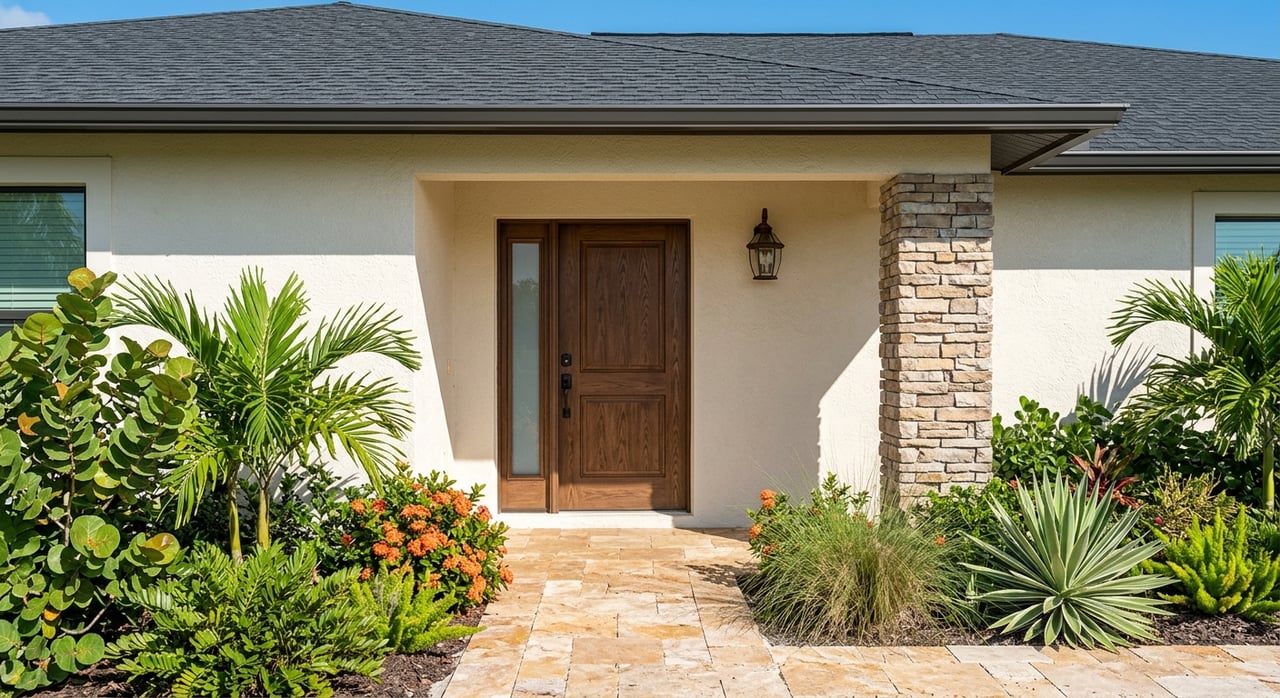
Are Jupiter Island Investment Homes a Smart Long-Term Hold?
June 25, 2026
June 25, 2026
If you are looking at Jupiter Island as a long-term hold, the first question is not just, "Will values rise?" It is also, "What exactly am I buying that is hard to replace?" For many buyers, that is the real appeal here: rare coastal land, tightly limited supply, and a setting shaped as much by preservation as by luxury. This guide will help you think through Jupiter Island with a long-view mindset, from scarcity and property selection to taxes, flood considerations, and ownership costs. Let’s dive in.
Jupiter Island is not a broad, fast-moving housing market. It is a small barrier-island town at the south end of Martin County with about 1,643 acres of land, nine miles of ocean frontage, roughly 820 permanent residents, nearly 2,000 seasonal residents, and only 705 taxable parcels.
Those numbers matter because they help explain why buyers often view Jupiter Island less like a typical neighborhood and more like a rare land-constrained coastal holding. Martin County’s 2025 population bulletin projects only modest permanent-population growth, from 840 in 2025 to 927 by 2050, which reinforces the idea that this is not a place built for major expansion.
The town describes itself as a high-quality, low-density residential community. Its primary land uses are secluded single-family estates and conservation or preservation, with limited commercial uses that mainly serve residents.
A big part of the long-term-hold case comes from local land-use policy. Jupiter Island’s comprehensive plan says the residential land-use category is intended primarily for single-family structures, and future housing should be restricted to single-family residences.
The same plan says additional commercial development should not be permitted except to improve services at the Jupiter Island Club and Hobe Sound Yacht Club. In simple terms, the framework supports stability and low density, not broad new development.
That matters if you are thinking like a long-term owner. When future supply is tightly constrained, each parcel can become more distinct, and future competing inventory may remain limited.
On Jupiter Island, not all properties should be viewed through the same lens. A small change in frontage, elevation, condition, or sightline can have an outsized effect on value.
The town’s planning language says lot changes should not unreasonably compromise ocean or Indian River sightlines. That helps explain why lot width, geometry, and protected views can be so important when you compare one property to another.
In a market this thin, buyers are often underwriting the land and its attributes as much as the residence itself. You are not just comparing square footage. You are comparing access, exposure, frontage, views, and future flexibility.
As of May 2026, Realtor.com showed 25 homes for sale and 3 homes for rent in Jupiter Island. It also reported a median listing price of $18.575 million, a median price of $3,147 per square foot, a median of 104 days on market, and homes selling at about 96% of asking price on average.
That is a small inventory pool with very high price points. In a market like this, one exceptional property can skew averages, so you should be careful about treating headline numbers as a shortcut for value.
Instead, it is often more useful to focus on property-level details. In Jupiter Island, those details can be the difference between a good long-term hold and a merely expensive purchase.
For most buyers, Jupiter Island makes more sense as a legacy asset or capital-preservation play than as an income property. The town is low-density and single-family oriented, and the rental market appears very limited.
That point is supported by the May 2026 snapshot showing only 3 homes for rent. While some buyers may still value optional rental use, the overall profile looks much more aligned with long-term personal use, family continuity, privacy, and ownership of a scarce coastal parcel.
If your goal is near-term cash flow, this market may not check the same boxes as a more rental-oriented coastal area. If your goal is to hold rare property over time, Jupiter Island presents a different kind of value proposition.
When you compare Jupiter Island properties, a few features deserve close review because they can strongly affect both value and future enjoyment.
Ocean frontage, Intracoastal frontage, and dockability are core value drivers in coastal markets. A Florida waterway study found that waterfront carried a premium and that properties near the Intracoastal also showed higher average values than countywide benchmarks.
That is not a direct Jupiter Island comp set, but it supports the broader idea that water access and frontage remain central to value in barrier-island markets. If boating use matters to you, dockability and water conditions should be reviewed carefully.
Flood exposure is a major part of the ownership picture on any barrier island. Parcel-level flood zone, elevation certificate availability, and likely flood-insurance costs should be part of your due diligence before closing.
These are not minor details. They can affect insurance, renovation plans, long-term carrying costs, and how resilient a property may be during future weather events.
Because the town’s planning framework protects ocean and Indian River views when lot dimensions change, lot width and orientation can matter more than buyers first assume. A parcel with stronger sightlines or less risk of view compromise may deserve a different valuation than a nearby property with similar square footage.
Some buyers focus on the home as it exists today. Long-term holders should also think about what the property allows you to do later, especially if you may renovate, expand, or rebuild.
Jupiter Island’s flood guidance says all development or improvements in the floodplain require permits. That means future plans should be screened early, not after closing.
Property taxes are a major part of the long-horizon math. Martin County says real estate taxes are based on value, paid in arrears, and one mill equals $1 per $1,000 of property value.
The published 2025 millage table lists Jupiter Island’s total real-property rate at 16.3525 mills per $1,000 of taxable value. That number gives you a framework, but the more important takeaway is how assessed value may change after a purchase.
Martin County’s Save Our Homes guidance says the 3% assessment cap applies only to homestead-exempt property value, and assessed value can reset after a change in ownership. In practical terms, you should not underwrite your future taxes based on the seller’s current bill.
For second-home buyers, that point is especially important. Martin County says homestead exemption requires the property to be your primary residence and that you declare Florida as your permanent residence, so a seasonal or legacy home may carry a very different tax profile.
Barrier-island ownership comes with real physical considerations. NOAA explains that barrier islands are constantly changing sand deposits that move, erode, and can even disappear, while sea-level rise and extreme weather can worsen erosion.
That does not mean Jupiter Island is not a compelling long-term hold. It does mean you should evaluate the property with open eyes and a realistic ownership plan.
The town’s flood guidance says substantial improvement or substantial damage is defined at 50% of value. That threshold can affect what happens after a major event and what may be required if you improve the property.
Martin County also notes that standard homeowners policies usually do not cover flooding and that separate flood insurance should be considered regardless of zone. Insurance planning should be treated as a core part of your acquisition analysis, not an afterthought.
Beyond price and aesthetics, Jupiter Island ownership can involve practical systems and local rules that deserve careful review.
The town says many properties are served by on-site septic tanks. That means wastewater setup, maintenance history, and future replacement planning should be part of your due diligence.
The town also notes that driving on the beach is prohibited and dunes should not be disturbed. Its coastal-management approach is designed to restrict development that would damage coastal resources or increase exposure to natural-disaster or sea-level-rise risk.
For long-term owners, these rules are not just limitations. They are also part of what helps preserve the island’s low-density character.
If you are considering Jupiter Island for the long run, it helps to think in layers. First, evaluate the scarcity of the parcel itself. Then assess the practical ownership profile, including taxes, insurance, flood considerations, septic, and future permitting.
In this market, the hold case is usually strongest when a property combines rare physical attributes with manageable long-term ownership realities. You are often buying something intended to be enjoyed, preserved, and carried forward, not simply optimized for immediate yield.
That is why precise due diligence matters so much here. A disciplined review can help you separate a trophy purchase from a truly durable long-term hold.
If you want a senior-level perspective on Jupiter Island property selection, tax considerations, and the details that can shape long-term value, connect with Brad Westover for tailored guidance.
Stay up to date on the latest real estate trends.



Real estate success starts with the right broker. Whether you're buying, selling, or investing, Brad Westover offers expert guidance, market insight, and a strategic approach. Let’s achieve your goals. Connect today!
GET IN TOUCH WITH BRAD TO LEARN MORE