Townhome Or Single-Family In Palm Beach Gardens?
June 11, 2026
June 11, 2026
If you are deciding between a townhome and a single-family home in Palm Beach Gardens, the label alone will not tell you enough. In this market, two homes with very different day-to-day lifestyles can sit at similar price points, and two neighborhoods with the same property type can come with very different maintenance rules. This guide will help you compare privacy, upkeep, location, and budget so you can make a more confident move in Palm Beach Gardens. Let’s dive in.
In Palm Beach Gardens, city planning documents draw a broad distinction between lower-density areas that are mainly intended for detached single-family homes and medium- to high-density areas that include attached housing such as townhomes. The city also places higher-density residential uses closer to shopping, employment centers, major roads, and future transit-oriented areas.
That matters because your choice is often about more than the floor plan. A townhome may place you closer to central corridors and mixed-use areas, while a detached home is more often found in lower-density neighborhoods. In real life, that can shape your commute, your access to daily conveniences, and the kind of neighborhood feel you get.
Palm Beach Gardens generally clusters attached housing in central and east-central pockets and in newer mixed-product growth areas. The city’s planning framework supports that pattern, especially near major corridors and designated growth districts.
Detached homes remain the dominant fit for the city’s Residential Low areas. The city specifically describes that category as intended for developments comparable to PGA National and older residential communities, which helps explain where much of the traditional single-family stock is concentrated.
Avenir is a good example of how Palm Beach Gardens is growing. The planned development includes a 250-unit townhome subdivision in its Town Center District, while the broader area also includes multiple single-family pods.
That means buyers should not assume the city is split into a townhome side and a single-family side. In several newer areas, both product types exist near each other, and the better fit often comes down to lifestyle priorities instead of a simple map search.
One of the biggest misconceptions in Palm Beach Gardens is that townhome always means less work and single-family always means full responsibility. The research shows the picture is more nuanced.
City code-compliance standards apply across residential properties and specifically address lawn care, roofs, exterior surfaces, fences, pools, and other visible upkeep. So regardless of what you buy, basic property maintenance still matters.
Palm Beach Gardens examples show that community rules can vary widely. In some attached communities, HOA structures are more comprehensive and may include master insurance, exterior approval processes, and shared maintenance standards.
Garden Lakes is one example of a townhome community with a more structured association environment. Its HOA materials include a master insurance document and forms for exterior modifications, which reflects the kind of oversight many attached-home buyers should expect.
But detached-home communities can have strong exterior rules too. PGA POA states that its architectural review committee oversees exterior changes, showing that single-family ownership does not always mean total freedom over the outside of your property.
Some single-family communities also offer lower-maintenance features that buyers often associate with attached living. Woodbine, for example, says landscaping is maintained exclusively by the community association.
In other neighborhoods, the responsibilities are split. Eastpointe’s resident rules state that exterior landscaping is handled by the POA, while owners remain responsible for exterior walls, driveways, and roofs.
Before you choose a townhome or a single-family home, review the community documents with care. Focus on practical questions like these:
In Palm Beach Gardens, these answers can matter more than the property label itself.
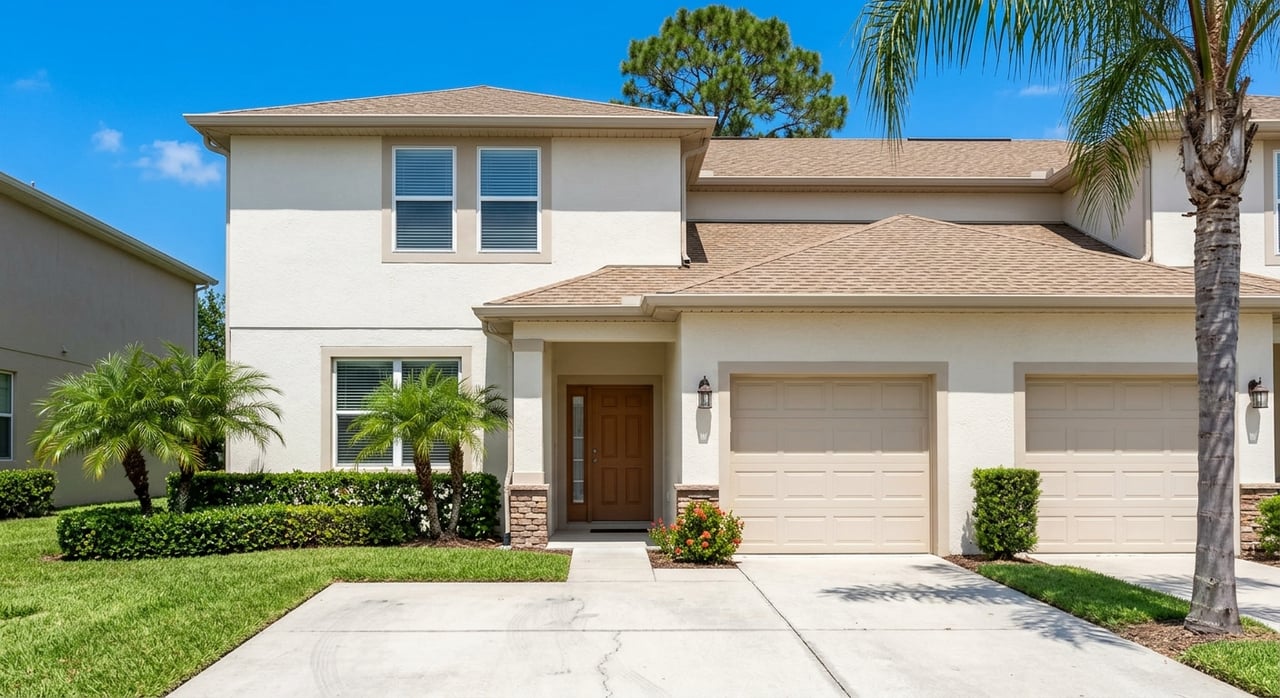
For many buyers, this is where the difference becomes more obvious. The city’s impact-fee study defines townhouse product as units separated from adjacent homes by a ground-to-roof wall and not sharing systems, which helps explain the physical layout many buyers experience in attached housing.
In simple terms, townhomes usually mean shared walls and closer spacing. Detached single-family homes usually offer more separation, more flexibility for outdoor features, and a greater sense of control over how you use your lot.
If you want a yard, room for a pool, or more freedom around fencing and landscaping, a single-family home may better match your goals. Detached homes often provide a stronger sense of privacy and a little more breathing room.
If you prefer a more compact footprint and do not need as much private outdoor space, a townhome may feel easier to manage. That can be especially appealing if your priorities are convenience, location, and a more lock-and-leave lifestyle.
The scale of local communities helps illustrate the difference. Garden Lakes is a 584-unit townhome community on more than 87 acres in a central part of the city, while Shady Lakes is a private single-family community of 97 homes arranged around winding streets and lakes. In Avenir Pod 19, a proposed single-family section includes 149 homes on 57 acres with 55- and 65-foot lots and nearly 45% open space.
Price is often part of this decision, but Palm Beach Gardens buyers should be careful about broad assumptions. Countywide numbers show a meaningful gap between attached and detached housing, but city-level pricing can shift that picture.
In Palm Beach County, townhouses and condos had a median sale price of $330,000 in March 2026 with 8.5 months of supply. Single-family homes had a median sale price of $675,000 in February 2026 with 4.9 months of supply.
At the same time, Palm Beach Gardens sits above the county attached-product average. Spring 2026 figures showed the city’s typical home value at $677,689 and its median sale price at $718,000, while Realtor.com described Palm Beach Gardens as a balanced market in March 2026, with homes selling about 3.85% below asking on average and a median of 67 days on market.
A townhome may still be the lower-cost entry point in many cases, but not always by as much as buyers expect in Palm Beach Gardens. Community location, amenities, HOA structure, age of the property, and overall maintenance scope can all affect value.
A single-family home may cost more upfront, but it may also give you more private outdoor space and more flexibility depending on the community. The better question is not just which one is cheaper, but which one gives you the lifestyle and responsibility level you want.
The smartest way to compare options in Palm Beach Gardens is to evaluate the community first and the property type second. That approach helps you avoid assumptions that can lead to the wrong purchase.
Ask yourself what you want your everyday ownership experience to look like. If you are balancing a seasonal lifestyle, limited time for upkeep, or a preference for a more managed setting, a townhome may check more boxes. If privacy, yard space, and greater control matter most, a detached home may be the stronger fit.
Use this checklist as you narrow your options:
In Palm Beach Gardens, the best choice is rarely about townhome versus single-family in the abstract. It is about which community gives you the right combination of privacy, upkeep, location, and value.
Some townhome communities offer a highly structured, maintenance-light lifestyle. Some single-family neighborhoods still have meaningful HOA oversight and association-covered landscaping. That is why local, community-level review is so important before you buy.
If you want help comparing neighborhoods, HOA structures, and ownership tradeoffs in Palm Beach Gardens, Brad Westover offers the kind of senior-level local guidance that can make the decision clearer. To start the conversation, connect with Brad Westover.
Stay up to date on the latest real estate trends.
Real estate success starts with the right broker. Whether you're buying, selling, or investing, Brad Westover offers expert guidance, market insight, and a strategic approach. Let’s achieve your goals. Connect today!
GET IN TOUCH WITH BRAD TO LEARN MORE