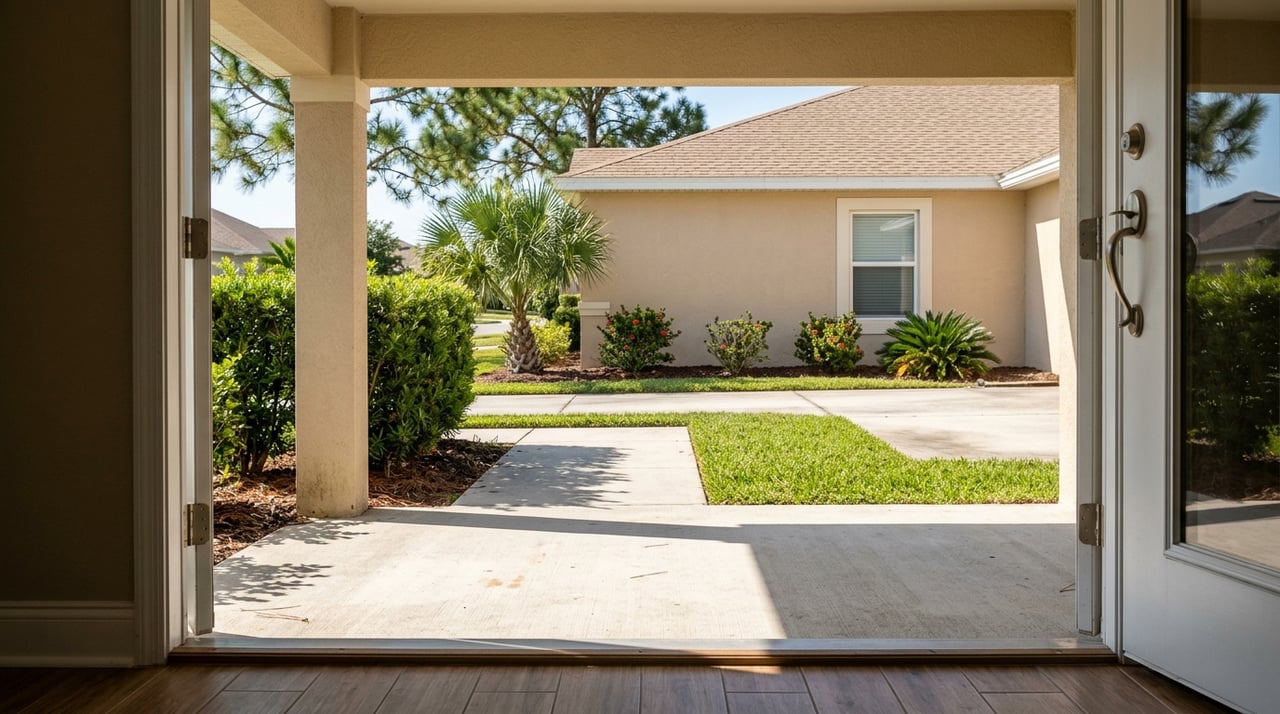
How Remote Buyers Can Confidently Purchase In Stuart And Palm City
May 14, 2026
May 14, 2026
Buying a home from out of state can feel risky, especially in a coastal Florida market where timing, paperwork, and property details matter. If you are considering Stuart or Palm City, you want more than a pretty listing and a quick video tour. You want a process that helps you verify the right details, avoid surprises, and move forward with confidence. The good news is that with the right local guidance and the digital tools available in Martin County, a mostly remote purchase is very workable. Let’s dive in.
A remote home purchase in Stuart or Palm City is possible because many of the key steps can be handled online. Martin County offers digital access to property information, parcel data, permit status, and official records, which gives you a strong starting point for due diligence before you get on a plane.
Florida also supports remote transaction steps in practical ways. Electronic signatures generally carry the same legal effect as handwritten signatures in covered transactions, and Florida allows online notarization when the notary follows the required state process. For real estate conveyances, deeds still require two subscribing witnesses, but electronically signed and electronically notarized documents can still be accepted for recording when they meet Florida requirements.
Before you focus on contract terms, narrow your options with tools that help you judge fit and condition from a distance. Virtual showings, live video walkthroughs, and 3D tours can help you understand layout, flow, finishes, and how a property lives day to day.
This early screening step matters because it can save you time and travel. Instead of flying in for every possibility, you can reserve in-person visits for homes that already match your goals on location, size, and overall feel.
A virtual tour is most useful when you treat it like a first showing, not a final decision. Ask to see exterior condition, ceiling lines, flooring transitions, windows, storage areas, and views from major rooms. If a home is in a coastal or storm-sensitive area, it also helps to ask for a closer look at doors, windows, and visible exterior features.
Live video is helpful because you can direct the walkthrough in real time. You can ask questions as they come up and request extra views of areas that might not be emphasized in listing photos.
One of the biggest advantages for remote buyers in Martin County is the amount of public property information you can review online. Before writing an offer, you can use county tools to research facts that may affect your decision, financing, insurance, or long-term ownership costs.
Martin County’s Property Information Lookup can help you review details such as flood zone, land use or zoning, building wind speed, utilities, and school zone assignments. The county also provides Land LookUp and permit-status tools, which can help you review parcel data, permit history, and whether there may be unresolved building issues.
When buying from afar, it helps to create a simple due diligence checklist. Focus first on the issues that may affect your budget, timeline, or ability to insure the property.
This kind of review does not replace inspections or legal advice, but it can help you ask better questions before you commit.
If you are buying remotely, the home inspection becomes even more important. Florida licenses home inspectors, and state law requires a written report identifying significant deficiencies, components near the end of their service life, and items that were present but not inspected.
That written report gives you a more structured view of the property than a casual walkthrough ever could. It is especially valuable when you cannot personally attend every showing or visit the home multiple times before closing.
A Florida inspection report is designed to help you spot major concerns and understand the condition of visible systems and components. Under state law, the inspector is not required to provide repair-cost estimates, so you should not expect the report itself to serve as a contractor bid.
For a remote buyer, this means the report is best used as a decision tool. It helps you identify whether to proceed, renegotiate, ask for more information, or bring in additional specialists if needed.
In Stuart and Palm City, flood and storm risk deserve extra attention. Martin County explains that flood zones are based on FEMA flood insurance rate maps, and that A and V zones are special flood hazard areas.
If you are using a federally backed mortgage on a property in one of those higher-risk zones, flood insurance is required. That is a major detail for remote buyers because insurance timing can affect your closing schedule and your monthly ownership costs.
This is an easy point to miss when you are buying from another state. Martin County specifically distinguishes flood zones from evacuation zones, so you should not assume they mean the same thing.
The county also notes that hurricane season runs from June 1 through November 30 and publishes storm-surge evacuation zones. For remote owners and seasonal residents, AlertMartin can be an important tool for emergency notifications and evacuation notices.
If a home may require flood insurance, do not wait until the final days before closing to begin that process. FEMA notes that National Flood Insurance Program policies usually have a 30-day waiting period.
That timing matters. If you discover the need for coverage too late, it can create unnecessary stress right when you are trying to finish inspections, finalize documents, and prepare to close.
If the home will be your primary residence, tax treatment may differ from a second home or seasonal property. Florida’s homestead statute applies to property that is the owner’s permanent residence, and the Martin County Property Appraiser says the home must be your permanent residence for homestead treatment.
The initial homestead application is due by March 1. By contrast, second homes, seasonal residences, and vacation properties generally do not receive that same treatment, so it is important to be clear about how you plan to use the property.
Many remote buyers in this market are purchasing a second home, a seasonal residence, or a future retirement property. That makes it important to confirm your intended occupancy early, because your expectations about taxes should match the property’s actual classification.
A clear conversation up front can help you avoid confusion after closing.
Florida’s closing framework makes remote execution possible, but the details matter. Deeds require two subscribing witnesses, and online notarization must be performed by a Florida online notary using audio-video technology and identity verification.
The good news is that real-property documents that are electronically signed or electronically notarized can still be validly recorded once accepted by the clerk. Martin County’s clerk also accepts and records electronic documents, which supports a mostly digital closing process for many buyers.
In practical terms, a remote closing still needs to be carefully coordinated. Your documents must be signed correctly, witnessed correctly, notarized correctly when applicable, and submitted in a recordable form.
That is why experienced transaction coordination matters so much for out-of-state buyers. A clean process reduces last-minute errors and helps keep your closing on track.
Your remote workflow should not stop once the deed records. Martin County’s clerk offers electronic certified official-record documents and a free Property Fraud Alert service that notifies owners when a recorded document uses a name they are monitoring.
That can be especially useful if you will not occupy the home year-round. Absentee owners and seasonal residents often benefit from setting up simple systems that make it easier to spot issues early.
Post-closing ownership in Martin County is often easier to manage remotely than buyers expect. The county’s Building Department accepts online permit applications, provides online permit status, and offers virtual inspections for certain permit types, including air conditioning, garage doors, water heaters, and windows and doors.
Martin County’s code-enforcement division also maintains a vacant-property registry and states that complaints are investigated within five business days. If you plan to own a seasonal or occasionally vacant property, understanding these tools can help you stay organized after the purchase.
Buying in Stuart or Palm City from a distance is not about skipping steps. It is about sequencing them well. When you combine virtual tours, county record checks, inspection reports, insurance timing, and a properly managed digital closing process, you can make a smart decision without handling every detail in person.
That is where senior-level local guidance makes a real difference. If you want a steady hand for a remote purchase in Martin County, connect with Brad Westover for experienced, high-touch support tailored to your goals.
Stay up to date on the latest real estate trends.
Real estate success starts with the right broker. Whether you're buying, selling, or investing, Brad Westover offers expert guidance, market insight, and a strategic approach. Let’s achieve your goals. Connect today!
GET IN TOUCH WITH BRAD TO LEARN MORE